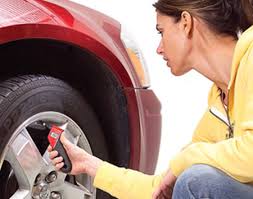
Before any travel or road
trips, it's important to check your tires. Did you know that your tires
can lose about one pound per square inch (psi) of air pressure each
month, and another one for each ten degrees drop in temperature?
Therefore, it is extremely crucial to make sure that you are checking
your car's tire pressure regularly,
including your spare
tire, especially during the winter
months.
Driving with low tire pressure can lead to
some serious performance issues with your vehicle. It can adversely
affect your handling and cause you to become more accident prone, as
well as causing your car to be less fuel
efficient.
You can check your tires easily. Here's
how:
- Buy a digital tire gauge and keep it
in the car (This will costs about $10). Consider buying a small notebook
that you can use to record your tire pressure and, later, your
increased fuel economy.
- Find the recommended tire
pressure level for your car. This information is in your owner's manual
or on the driver's side door jamb. Note that it might call for different
pressure levels for the back tires, front tires, and
spare.
- Check the pressure when the tires are cold.
Tires heat up as they drive and can take a half hour to cool down. The
best time check the pressure is first thing in the
morning.
- Unscrew the valve cap and set it to the
side or in a pocket where you won't lose it.
- Press
the tire gauge onto the valve stem. There might be a slight hiss as you
press down on the valve stem and again as you release it. You only need
to do this for a second or two, long enough to get an accurate
reading.
- Read the tire pressure on the digital
gauge. You might consider writing down the pressure of the tires as you
go around the car. You can refer to this when you fill up the
tires.
Now it's time to enjoy improved fuel
economy, reduced tire wear and — above all else — safe driving. If you
think you are in need of new tires, don't wait until it's too late!
Schedule an appointment today at Conicelli Hyundai!